Supporting children through the loss of a pet
A guide for families, schools and carers.
Looking for the full printable guide, ‘Supporting Chilidren Through the Loss of a Pet’?
Get your free copy below.
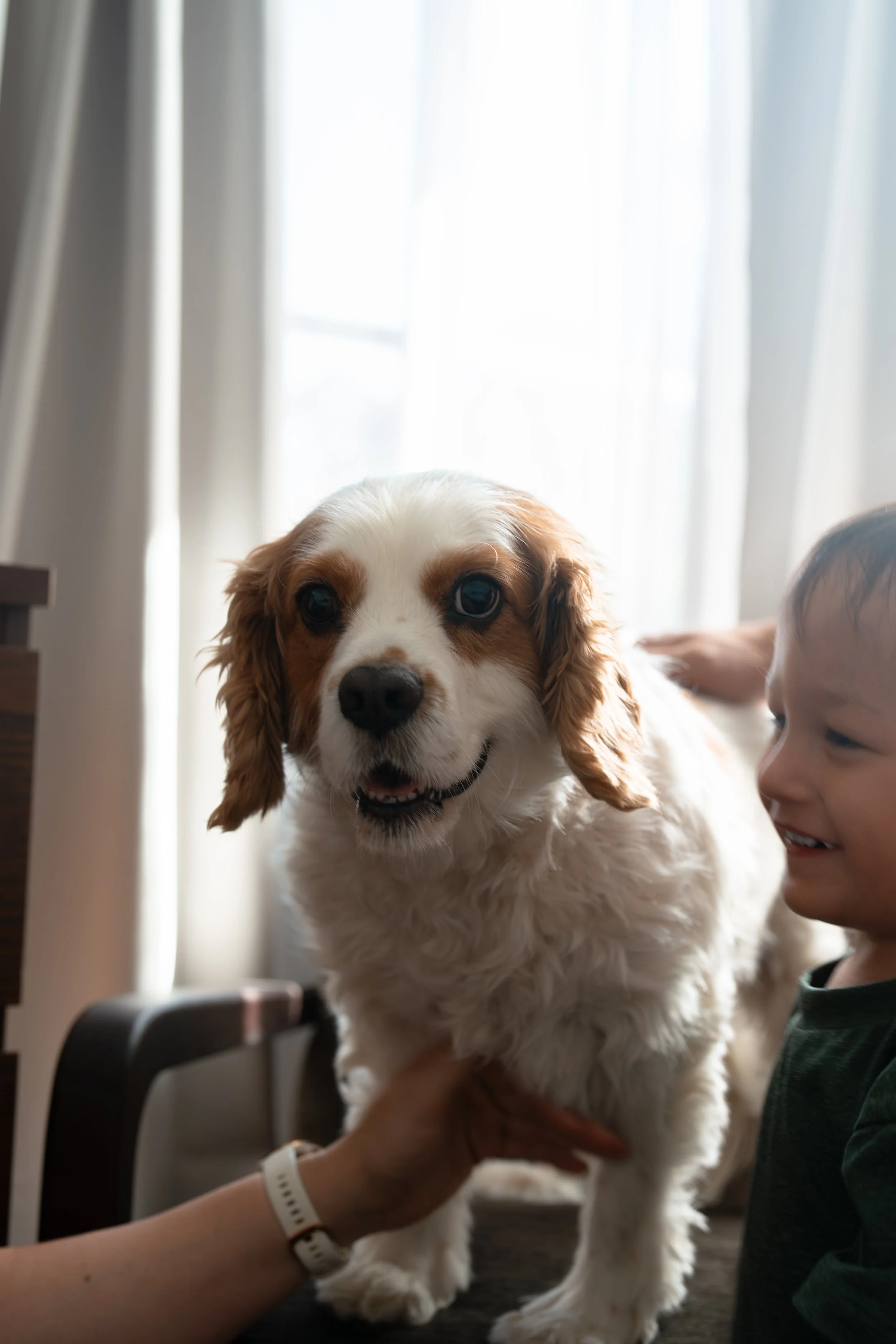
Losing a pet is heart-breaking, for kids and grown-ups alike.
For many children, it's their first real experience of grief. In one large study, 63% of children with pets had experienced the death of a pet by the age
of 7 (Crawford et al., 2021). Their sadness deserves to be taken seriously, and with gentle, honest support, most children cope well.
A note from Dr Allie: I care for pets and their families through the last chapter of life, from comfort and palliative care at home, through hospice, to a gentle goodbye. Over those weeks and months, children are often right there with us, asking big questions and finding their own ways to say goodbye. Here are the things I most want families to know.
What to say
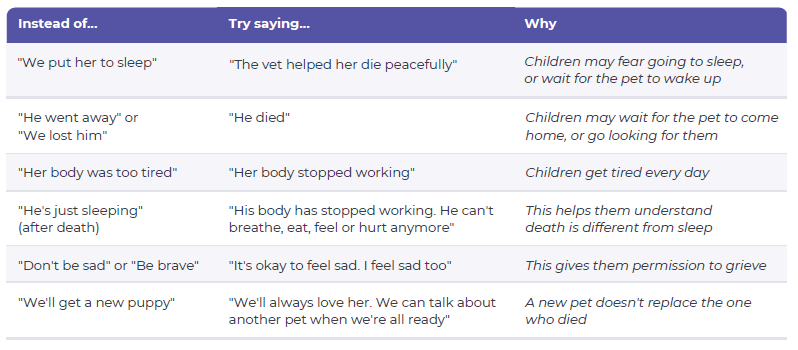
Keep it simple and honest. Use the words "died" and "dead". Children take words literally, so phrases like "put to sleep" or "went away" can leave them confused or frightened, and some even become scared of going to sleep themselves (St Jude Children's Research Hospital). Try something like this:
"Max is old and sick, and his body isn't working properly anymore. The vet has told us there is no medicine that can make him better, and he is hurting. So we're going to help Max die peacefully, so he doesn't have to hurt anymore. We love him so much, and this is one last way that we can care for him."
Let them lead. Children often ask the same questions again and again. That's how they make sense of it. Keep answering gently, using the same simple words each time.
Name emotions. "It's okay to feel sad, angry or confused." Let them see your feelings too. It shows them grief is normal, not something to hide.
How children grieve at different ages
Every child is different, but there are some common patterns with age groups:
Under 5: don't yet understand that death is final, and may ask when their pet is coming back
5 to 8 years: begin to understand that death is permanent, and may worry that others will die too
9 to 12 years: ask deeper questions, and may want to be part of decisions and goodbyes
Teenagers: understand death much as adults do, and often grieve privately
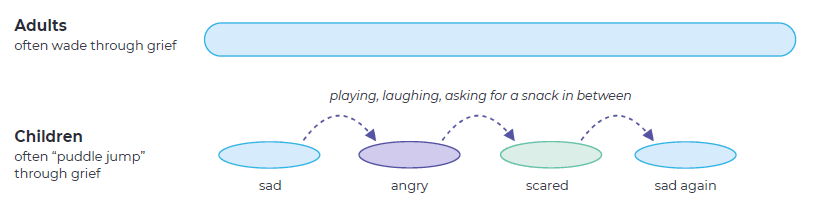
Children also "puddle jump" in and out of grief, deeply sad one minute, then asking what's for dinner the next (Grief Australia). This is normal and healthy, and doesn't mean they've stopped caring.
Should children be there for the goodbye?
There's no single right answer, but where possible, it’s important to give children a choice.
Children who are well prepared and given the choice can usually cope with being present (Allen, 2019). There are a few options you can give them:
Be there the whole time, with an adult beside them.
Say goodbye, then step out, with the option come back to see their pet afterwards.
Say goodbye beforehand, with the option to see their pet afterwards.
A note from Dr Allie: When I visit, children are welcome to be as involved as they choose.
Some sit right beside their pet the whole time, some pop in and out, and some say goodbye and then head off to play. It can help to organise another adult to be present on the day to look after the children so that you can focus your attention on loving and saying goodbye to your pet.
When to seek extra support
Most children cope well with love and honest support. Consider reaching out if a child has ongoing sadness or worry that isn't easing, trouble sleeping or eating, or grief that's getting in the way of everyday life, friendships or learning. Your GP and school wellbeing staff are good places to start.
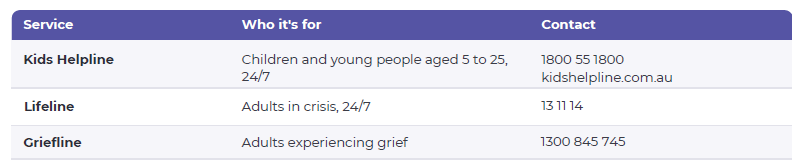
In an emergency, call 000.
Get a free printable guide
My 10-page guide, Supporting Children Through the Loss of a Pet, goes into much more detail, and it's free. It's written for families, schools and carers, and inside you'll find:
How to prepare children before the goodbye
What children might see on the day, and how to explain it
Gentle words for burial, cremation and other pets
Answers to the most common questions children ask
A list of age-appropriate children’s storybooks about pet loss and grief
Advice and classroom activities for teachers
How we can help
Gentle end of life care at home, with room for the whole family
Comfy Critters Home Vet is a mobile palliative care and end of life vet service on the Central Coast.
We visit families at home, where pets are most comfortable and children can say goodbye somewhere safe and familiar.
Comfort and palliative care: keeping pets with chronic or life-limiting conditions comfortable at home, for as long as they're happy.
Hospice care: ongoing support through the final weeks and days, for your pet and your whole family.
Quality of life consults: an unhurried visit to help you understand how your pet is really going, how to measure quality of life for your pet and yourself, and what comes next.
Gentle in-home euthanasia: a peaceful goodbye at home, with time to prepare children and let them be as involved as they choose.
Aftercare: we can help arrange cremation, keepsakes and memorials, so you don't have to.
If you're not sure what your children are ready for, we're happy to talk it through with you before the day.
We visit homes across the Central Coast, from Woy Woy and Gosford to The Entrance, Wyong and Lake Munmorah, and Newcastle and Lake Macquarie by appointment.
Frequently Asked Questions
-
Use simple, honest words: their pet is very sick, the vet can't make them better, and the vet will give medicine that helps them die peacefully without pain. Avoid "put to sleep", which can make young children afraid of sleep. Expect to repeat the same explanation many times.e
-
Where possible, let your child choose. Children who are prepared beforehand usually cope well with being there. Other options are saying goodbye and stepping out during the procedure, or saying goodbye beforehand and seeing their pet afterwards.
-
For many families, yes. A goodbye at home happens somewhere familiar and calm with safe spaces to retreat to. There isn’t a stressful car trip or a waiting room, and children can come and go as they need. Other family and pets can be there too.
-
There's no set timeline. Children often move in and out of grief, and it can resurface months or years later as they grow. If sadness, worry or behaviour changes last or get in the way of daily life, talk to your GP or school wellbeing staff.
-
Yes. Letting your child’s teacher, school or carer know means they can look out for changes, offer a little extra support, and use the same gentle words you’re using at home.
Please share this page and our free printable guide with them. It includes advice and simple classroom activities written especially for teachers and carers.
-
Try not to rush. A new pet too soon can make children feel their pet was easily replaced. When the whole family feels ready, involve your children in choosing.
-
Yes. We're happy to talk with you before the day about what to say and how your children might like to be involved, and on the day we'll go at a pace that works for your whole family.
References and further reading
Allen, E. (2019). Helping children through pet loss. Argus Institute, Colorado State University.
Crawford, K. M., Zhu, Y., Davis, K. A., Ernst, S., Jacobsson, K., Nishimi, K., Smith, A. D. A. C., & Dunn, E. C. (2021). The mental health effects of pet death during childhood: Is it better to have loved and lost than never to have loved at all? European Child & Adolescent Psychiatry, 30(10), 1547-1558.
Grief Australia. (2024). Grief in children: How to look after a child who is grieving.
St Jude Children's Research Hospital. (n.d.). How to help your preschool child cope with death.
The full reference list is in the printable guide.
This page is general information, not medical or psychological advice.
If you're worried about your child, please speak with your GP or a qualified counsellor.
Last reviewed: October 2026. Written by Dr Allie Logan, Comfy Critters Home Vet.